
 Views: 14




Summary – Threatened by a strong franc, talent shortages and obsolete legacy systems, Swiss companies risk falling behind more agile competitors. Robotic automation, hybrid platforms, predictive AI and unified data are all levers to standardize and accelerate production and steer real-time migration to microservices architectures.
Solution: targeted audit, modular digital roadmap, adoption of open-source building blocks and strengthening sovereign ecosystems.
Switzerland enjoys an enviable economic position, supported by one of the world’s highest GDPs per capita, first-class infrastructure, and a high-performance industrial base.
However, this excellence fosters a sense of security that masks a dangerous inertia risk. While other major economies ramp up their digitalization, artificial intelligence, and operational-model reinvention efforts, Switzerland could lose its relative competitiveness. Digital transformation is no longer a mere internal optimization project: it has become a strategic imperative determining Swiss companies’ ability to maintain their lead and boost productivity in the face of growing international pressure.
A Solid Economy… but Threatened by Inertia
Wealth per capita and institutional stability have long been Switzerland’s hallmarks. Conversely, slow digital adaptation risks a gradual disengagement on the global stage.
An Exceptional Macroeconomic Framework
For decades, Switzerland has ranked among Europe’s and the world’s leaders in GDP per capita. This performance is built on strong specialization in finance, the high-tech manufacturing industry, and luxury goods. Transport, energy, and telecommunications infrastructures are designed to withstand heavy loads and adapt to rapidly evolving international flows.
Political and regulatory stability boost investor confidence, positioning the country as both safe and predictable. This environment nurtures long-term project development and the expansion of public-private partnerships, especially in the technology sector. Swiss universities and research centers consistently appear in global rankings, fueling an ecosystem of skilled talent.
However, this apparent comfort can breed complacency. Companies, captivated by the environment’s robustness, may prefer sticking to established processes rather than adopting new ways of working or modernizing systems. This relative inertia could become a significant handicap against more agile, disruptive competitors.
Risks of Inertia and Loss of Competitiveness
Growth lagging behind that of the United States or certain Asian economies creates a widening gap year after year. In a world where digital innovation drives massive productivity gains, sitting out major tech waves leads to a subtle but continuous market-share decline. Switzerland’s relative costs—tied to a strong franc and some of the highest wage levels—become a burden if productivity does not keep pace.
Less-digitized companies face lengthened production cycles and shrinking margins under price pressure and the rapid execution demands of global markets. Competitors with robust automation, integrated data platforms, and advanced AI tools launch new offerings faster, at lower cost, and with greater customization. Slow migration to these models creates a split between leaders and followers.
Individually, these gaps may not seem dramatic. But cumulatively and amplified, they pose a risk of gradual disengagement, permanently affecting national competitiveness. Without swift awareness and coordinated mobilization, Switzerland risks weakening its economic standing against increasingly innovative rivals.
Illustrative Example: A Manufacturing Company
A mid-sized manufacturing company had long relied on an outdated enterprise resource planning system and paper-based processes for inventory management. Operators wasted several hours each week manually entering production data and reconciling discrepancies. Inventory errors led to delivery delays and over-ordering of critical components.
Following an audit, management decided to deploy a modular cloud platform and connect shop-floor systems in real time. Digitization reduced data-entry errors by 80 % and shortened order-processing times by 30 %. This modernization demonstrates how simple technology catch-up can transform performance metrics while preserving the existing ecosystem’s robustness.
This case highlights the urgency of rethinking architectures: operational inertia limits flexibility and penalizes competitiveness when every productivity gain achieved abroad becomes a new benchmark for your clients and suppliers.
Productivity through Digital: A Strategic Lever
In advanced economies, sustainable growth now relies on productivity rather than headcount increases. Automation, data, and AI are the primary engines for producing more with the same resources.
A New Definition of Growth
Switzerland can no longer depend solely on demographic expansion or opening new markets for growth. Pressure on the Swiss franc limits mass exporting, and talent shortages make large-scale hiring nearly impossible. Increasing productivity per employee has become the sine qua non for sustaining economic momentum.
Integrating digital tools into back-office, R&D, and maintenance processes allows activities to be standardized, automated, and monitored continuously. Unified data-management platforms provide instant insights and facilitate decision-making. Key performance indicators become more precise, paving the way for rapid iterations and better-calibrated product cycles.
By aligning digital strategy with business objectives, organizations achieve immediate savings on operational costs, service quality, and forecasting reliability. This systemic approach to productivity transforms digital into a lever for structural competitiveness.
Key Technology Levers
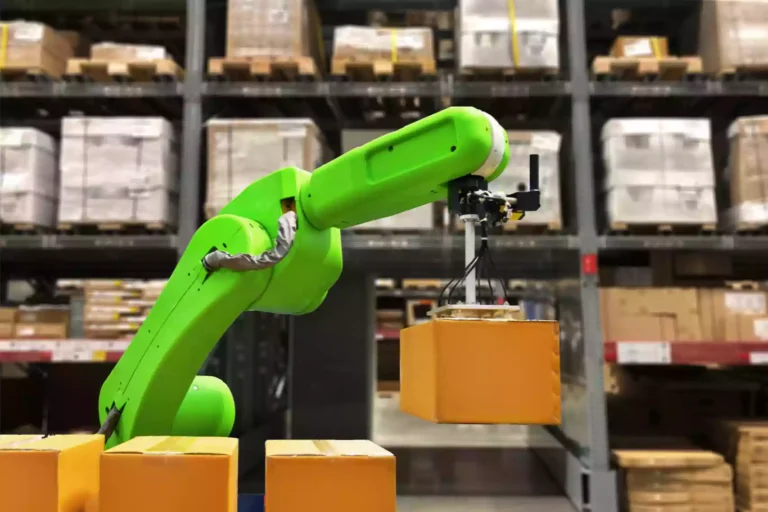
Robotic process automation reduces repetitive manual tasks in finance, human resources, and supply chain. Hybrid cloud platforms ensure scalability and resilience while limiting single-vendor dependencies. Generative and predictive AI optimize production schedules, customer journeys, and risk management.
Advanced data utilization—via modernized data lakes and warehouses—powers machine learning algorithms that detect real-time anomalies and deliver personalized recommendations. Open APIs facilitate the integration of these components into a modular ecosystem, avoiding vendor lock-in.
By combining these technology blocks within an evolving, modular, and secure architecture, Swiss companies can lower unit costs and accelerate time-to-market. This agility translates directly into market-share gains and the ability to reinvest in innovation projects.
Concrete Performance Uplift Example
An SME in financial services launched a pilot project to automate bank reconciliation tasks. Employees spent up to 40 % of their time manually verifying transactions and correcting discrepancies. By deploying an RPA engine paired with an AI module for contextual analysis, the firm cut this time by 75 % and improved reconciliation accuracy.
This case underscores the importance of prioritizing initiatives with high operational ROI before tackling more complex projects. It also highlights the need for agile governance to oversee these initiatives at the enterprise level.

Edana: strategic digital partner in Switzerland
We support companies and organizations in their digital transformation
Structural and Technological Challenges to Overcome
Legacy systems, data fragmentation, and talent shortages slow digital transition. Understanding these obstacles is essential to defining a realistic, effective roadmap.
Talent Shortages and the Need for Automation
Very low unemployment rates and migration restrictions limit access to advanced IT skills. Internal teams are often overloaded and focused on keeping existing systems operational. Recruiting becomes lengthy and expensive, especially as global competition attracts specialized profiles.
Automating repetitive tasks and implementing DevOps tools reduce pressure on teams and improve deliverable quality. CI/CD pipelines and automated testing ensure faster, more reliable production deployments. The goal is to free up talent to focus on innovation rather than maintenance.
To retain experts, companies must invest in continuous training, offer career progression paths, and adopt modern technical environments. Open-source solutions, coupled with clear internal governance, allow participation in dynamic communities and attract passionate professionals.
Legacy Systems and Data Fragmentation
Many Swiss organizations, especially in manufacturing and healthcare, rely on ERP and business applications deployed over a decade ago. These monolithic systems are hard to adapt and often lack modern APIs. Resulting data silos prevent a 360° view of the customer or value chain.
Implementing a centralized data platform, paired with a microservices architecture, facilitates the gradual migration of critical functions away from legacy systems. This “strangler pattern” approach enables module decoupling and flow rationalization without major operational disruptions.
By harmonizing repositories and standardizing exchange formats (JSON, gRPC, event streaming), companies gain agility. Teams can then deploy new digital services in weeks rather than months or years.
Act Now: Coordination, Sovereignty, and Skills
Digital transformation is a collective effort that extends beyond a single company. Ecosystems, partnerships, and data sovereignty are essential pillars.
Role of Ecosystems and Partnerships
Successful digitalization relies on collaboration among large enterprises, SMEs, startups, and public institutions. Anchor firms can sponsor open innovation programs, enabling rapid prototyping and feedback loops before industrialization.
Connections with startups specializing in AI, cybersecurity, or data engineering provide access to cutting-edge expertise and disruptive approaches. Regular exchanges with competitiveness clusters and regional hubs strengthen collective agility and disseminate best practices.
Creating shared platforms (data commons, sector-specific digital marketplaces) accelerates skills development and the structuring of digital service offerings tailored to Swiss specifics.
Digital Sovereignty and Infrastructure
Dependence on foreign hyperscale cloud providers raises data protection, compliance, and resilience concerns. To ensure digital sovereignty, developing local or regional infrastructures certified to strict security standards is critical.
Using open-source solutions and flexible cloud contracts prevents vendor lock-in and ensures workload portability. Hybrid and multi-cloud architectures support continuity of service and optimized cost management.
The public sector plays a key role in establishing standards, issuing adapted regulations, and incentivizing the adoption of sovereign technology components to support Switzerland’s entire economy.
Transform Your Competitiveness through Digital Transformation
Switzerland has all the assets to remain at the forefront, but these strengths require a rapid, coordinated update. Digital productivity, automation, and data exploitation are at the core of future performance. Challenges related to legacy systems, talent shortages, and sovereignty require hybrid, agile strategies supported by cooperative ecosystems.
Our experts are here to guide you in defining and executing your digital roadmap, prioritizing open source, scalable architectures, and a contextual approach. From auditing to integration, from AI to cybersecurity, we put our expertise at the service of your competitiveness and digital sovereignty.