
 Views: 365




Summary – Faced with explosive growth in fresh grocery e-commerce and demands for instant availability, ultra-short lead times and tight margins, real-time technology orchestration makes all the difference. From fine-tuned stock and expiration-date synchronization, adaptive logistics, warehouse automation and scalable hybrid cloud infrastructure to data/AI for forecasting and personalization, each layer eliminates friction and maximizes profitability. Solution: adopt an open-source, AI-driven modular platform, ensuring high availability, agility and continuous improvement.
Online fresh-produce e-commerce is experiencing explosive growth, fueled by discerning consumers and ever-increasing order volumes. Yet most vendors struggle to meet these new benchmarks: instant availability, ultra-fast delivery windows, a seamless experience, and managed pricing.
Selling online is no longer enough: it’s the technological orchestration behind the scenes that sets winners apart. Behind every click lies a complex supply chain where the slightest friction can plunge sales and erode loyalty. In this context, only flawless technological execution ensures stable, profitable growth.
The Operational Complexity of Online Grocery Retail
Fresh produce retail is unlike traditional e-commerce. The logistical challenges, perishability management, and razor-thin margins demand precise technological oversight. Success hinges on the ability to synchronize inventory, procurement, and shipping in real time, with zero room for error.
Perishable Product Constraints
Managing perishable goods requires constant visibility into stock levels and expiration dates. Any delay in updating inventory can lead to stockouts or overstock, resulting in financial losses and increased waste.
At a regional food distribution cooperative in French-speaking Switzerland, an internal tool poorly synchronized with warehouses led to the weekly destruction of 5 % of fresh products. This example demonstrates that inaccurate inventory tracking not only costs revenue but also undermines the brand’s responsible image.
To prevent these issues, systems must be capable of tracing every batch, automatically alerting for impending expirations, and rapidly redistributing at-risk products.
Complex Logistics and Fluctuating Volumes
Demand can vary from one to four times depending on promotions, seasons, or consumption peaks. Without flexible infrastructure scaling, spikes lead to delays and picking errors.
A mid-sized operator in German-speaking Switzerland experienced a weekly promotion that tripled orders. Its route-planning software couldn’t handle the load increase, resulting in 20 % of deliveries being canceled. This example highlights how variable volumes require tools that adapt in real time.
The solution is to integrate forecasting modules and dynamic resource reallocation to ensure service continuity and cost control even during peaks.
Tight Margins and Cost Optimization
Margins in online grocery retail are historically low, between 2 % and 5 %. Every additional cost—handling, transportation, or spoilage—eats into overall profitability.
An industrial equipment manufacturer discovered that unexpected production costs rose by 5 % due to a lack of synchronization between its cost-calculation module and the Warehouse Management System (WMS). This discrepancy reduced operating margins by two percentage points.
Technology must not only manage flows but also continuously model costs across multiple variables to adjust pricing or processes and protect margins.
Automation for Optimal Performance
Reducing manual tasks is essential to ensure speed, reliability, and cost control. Without automation, growth becomes unstable. From inventory management to shipping, every automated process eliminates friction and enhances profitability.
Real-Time Inventory Tracking
An inventory updated at every transaction prevents stockouts and overstock. IoT sensors and RFID systems automate data capture and ensure an instantaneous view of remaining quantities.
Asset tracking in logistics ensures reliable information and minimizes unsold goods.
Downstream, this accuracy feeds replenishment algorithms, minimizing working-capital requirements and ensuring optimal availability.
Warehouse Automation
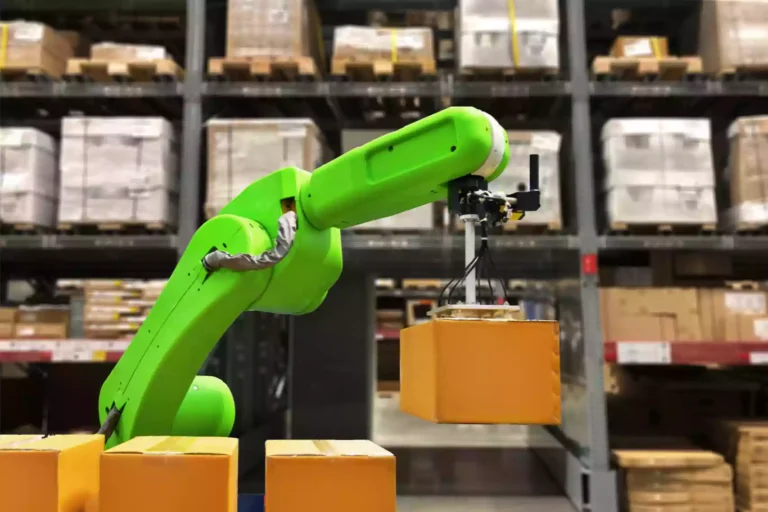
Automated conveyors, picking robots, and sorters optimize order fulfillment. They handle volume fluctuations without proportional increases in labor costs.
The key is seamless integration between WMS and robotics management tools to guarantee flawless orchestration.
Order and Delivery Optimization
Route optimization considers geographic constraints, time slots, and vehicle capacities. A dedicated calculation engine reduces mileage and emissions while meeting promised delivery windows.
Paired with real-time geolocation tracking, this module ensures transparency and enables instant response to disruptions.

Edana: strategic digital partner in Switzerland
We support companies and organizations in their digital transformation
Scalable Infrastructure to Prevent Outages
Every second of latency or downtime costs revenue and risks breaking customer trust. A resilient architecture is indispensable. Scalability, high availability, and hybrid or multi-cloud setups are the pillars of a high-performing, reliable platform.
Avoid Slowdowns During Peak Traffic
Interface or API slowdowns during cart validation can trigger massive abandonments. Architectures based on non-blocking services and distributed caches help maintain optimal responsiveness. Fastly vs Cloudflare is a useful comparison for selecting the right CDN.
Using CDNs for static content and distributed file systems for media significantly reduces congestion points.
Ensuring High Availability
Service incidents, database outages, or network failures must be managed without perceptible user interruption. Active-active architectures and automatic failover strategies ensure continuity. Terraform facilitates the setup of these mechanisms.
Implementing frequent health checks and automated orchestration scripts allows for instant detection and correction of anomalies.
Hybrid Cloud and Avoiding Vendor Lock-In
Choosing a hybrid model with public cloud, private cloud, or colocation data centers provides maximum flexibility. The ability to deploy services across multiple platforms reduces dependency risks and optimizes costs based on usage.
A multi-hub strategy reconciles performance, security, and sovereignty by leveraging infrastructure as code to deploy across environments with ease.
Data and Generative AI at the Heart of Growth
Companies that fully leverage their data and AI outperform competitors in average order value and retention. AI is no longer a luxury—it’s a prerequisite. From behavioral analytics to demand forecasting, every algorithm turns information into value drivers.
Behavioral Analysis and Segmentation
Collecting and analyzing shopping journeys helps identify customer segments, anticipate preferences, and personalize experiences. Recommendation engines use machine learning models that adapt suggestions in real time.
An organic produce delivery site implemented a cross-sell recommendation engine that increased average order value by 18 %. This example proves that fine-grained personalization, powered by transactional and behavioral data analysis, quickly yields measurable ROI. Machine learning in retail
Building internal expertise or integrating specialized APIs allows companies to maintain control without sacrificing algorithm quality.
Demand Forecasting and Inventory Optimization
Generative AI and predictive models leverage sales history, weather, events, and trends to refine forecasts. Each batch is adjusted to expected demand, reducing stockouts and spoilage.
At a purchasing cooperative, implementing a predictive model cut unsold fresh products by 12 %. This example underscores that forecast accuracy depends on input data quality and algorithm sophistication.
Combined with an automated replenishment system, the model ensures stock levels follow fluctuations and maximize availability.
Chatbots and Personalized Support
AI-powered chatbots provide 24/7 support, answer product queries, assist with cart recovery, and guide customers. They help reduce churn and streamline the experience.
A virtual assistant capable of handling 65 % of basic inquiries without human intervention illustrates the impact on customer satisfaction and service cost reduction. AI in the enterprise
This level of automation requires ongoing model training and business supervision to ensure response relevance.
Transform Your Online Grocery Platform into a Growth Engine
The online grocery sector is expanding rapidly, but only players who master their technology stack come out on top. Operational complexity, automation, scalable infrastructure, data, and AI are interdependent levers that shape performance and loyalty.
Adopting a systemic vision, opening your ecosystem with open-source, modular solutions, and integrating AI as a standard are essential steps. Our experts are ready to help you optimize every component, from design to execution, transforming your grocery platform into a sustainable competitive advantage.